
Which Martial Art Should I Learn? An Honest Guide for You or Your Child
I get asked this regularly. Which martial art should I learn? My answer is always the same. The best martial art for you depends on what you are looking for.
That is not a dodge. It is the most honest thing I can tell you. Because the right answer for a parent who wants their child to build confidence and learn to handle conflict is completely different to what suits someone who wants practical self-defence skills for everyday life. And neither of those is the same as what works for someone chasing competition or a sport-based fitness goal.
So, why should you listen to me?
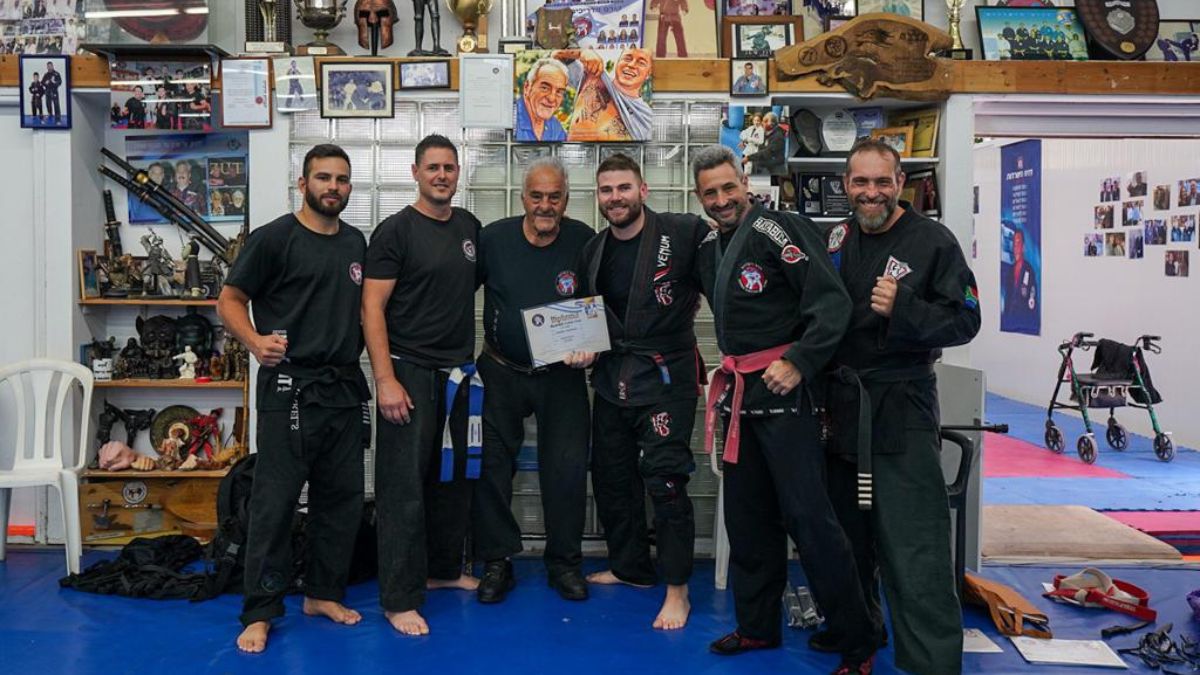
I am Max McGregor, founder and chief instructor of Champions Krav Maga Academy in Holland Park. I am a 3rd Degree Black Belt and Senior Instructor in Gendai Ryu Krav Maga and Jiu-Jitsu, and the Brisbane Representative for the Federation of Israeli Martial Arts. I have trained for over 12 years across Krav Maga, Brazilian Jiu-Jitsu, Muay Thai, Judo, and mixed martial arts. Before that, I served in the Australian Army, worked as a frontline Transit Officer, and was a certified Operational Skills and Tactics Instructor for Transit Officers, taught by the Queensland Police Service.
Which martial art should I learn? Start with one question
Before choosing a martial art or a school, ask yourself one question.
Who do you want to become?
Not what techniques do you want to learn. Not which style looks most impressive. Who do you want to be at the end of this, and what do you want training to do for your life?
Someone who feels safer and more capable day to day? Someone who can protect their family if something goes wrong? A competitive fighter or athlete? A more disciplined, focused version of yourself? Someone who finally follows through on something they have been putting off for years?
Your answer should drive everything else, including which martial art you choose. Because martial arts training will shape you physically, mentally, and in how you carry yourself. The style and school you choose determines what that shape looks like.
What martial arts actually are
Martial arts are structured systems of combat and self-defence. Most began as practical tools, ways for soldiers, communities, or individuals to survive under real threat. Over time, many evolved to include grading systems, competition formats, tradition, and a broader philosophy around discipline, respect, and personal development.
Today, martial arts range from traditional styles like Karate, Judo, and Taekwondo to modern systems like Brazilian Jiu-Jitsu, Muay Thai, boxing, and Krav Maga. They differ significantly in what they focus on, how they train, and what they are actually designed to do.
That last point matters more than most people realise when they are choosing a martial art.
The two categories most people do not think about
Here is something I tell every person who comes through the door. There are essentially two categories of martial arts training, and most people are not aware they are choosing between them.
Self-defence focused training is built around real-world situations. The goal is to recognise danger early, respond effectively under pressure, and get to safety. It has to work for everyday people and not just trained athletes. It also has to account for the unpredictable nature of real violence, meaning weapons, multiple attackers, confined spaces, and situations that escalate without warning.
Sport and competition focused training is built around rules, weight categories, referees, and an opponent who has agreed to compete under controlled conditions. That structure produces excellent athletes and highly capable fighters. But it is a fundamentally different goal. Honest coaches in those disciplines will say the same thing.
Neither category is better. They are different. The problem comes when people choose a sport-based art for self-defence reasons, or expect a self-defence system to prepare them for competition. Both lead to gaps that only become obvious when it matters most.

The biggest mistake people make when choosing a martial art
In over 12 years of training and coaching, I have seen one mistake come up more than any other.
People choose a martial art for self-defence that does not actually cover self-defence.
What I mean by that is this. Real self-defence is not just about what happens during a physical confrontation. It covers three distinct phases, and each one is critical.
Before
This is the phase most martial arts ignore entirely. Before anything physical happens, there is always a lead-up. Real self-defence starts with awareness. Reading an environment. Recognising when something feels wrong before you can explain why. Understanding the behavioural cues that signal a situation is escalating. Making decisions that keep you out of danger before it develops. De-escalation. Positioning. Knowing when to leave and how to do it without turning your back.
My own instructor, Gavriel Schneider, was the first person who made me understand this properly. He taught that real self-defence is proactive. It is about staying aware, making smart decisions, and remaining in control well before a physical response is ever required. That completely changed how I think about training and how I coach today.
during
This is what most schools train. But even here, the gap between a controlled gym environment and a real confrontation is significant. In the Army and working as a Transit Officer, I saw how fast situations escalate and how differently people respond under genuine threat. What works in a mat session with a cooperative partner does not always hold up under real adrenaline, in a confined space, against someone who is not following any rules. Training has to account for that, and most traditional styles do not.
After
This is the phase almost nobody covers, and it is one of the most important. In Queensland, the use of force in self-defence is governed by law. What constitutes reasonable force? When does self-defence become assault? What are your legal obligations if someone is injured? What do you say and what do you not say when police arrive? These are not abstract questions. They are real considerations that anyone using physical force in a self-defence situation needs to understand. Knowing how to fight without understanding the legal framework around it is an incomplete education.
This is one of the core reasons Krav Maga, taught properly, is the best martial art for self-defence. It is the only system I have encountered that is genuinely designed to address all three phases as part of a complete training approach.
The main martial arts styles compared
Here is my honest take on each one, so you can answer ‘which martial art should I learn?’ for yourself.
Krav Maga
Krav Maga is a modern self-defence system developed for the Israeli military and adapted for civilians. It draws from boxing, Muay Thai, wrestling, Judo, and Jiu-Jitsu, keeping only what works under real-world pressure. There are no forms, no rituals, and no sport competition. The focus is entirely on awareness, practical response, and getting to safety.
When I was in the Army and training in various styles, I kept finding the same gap. Effective in theory, limited in practice. Krav Maga was the first system I encountered that addressed that gap directly. It is designed for everyday people and not just athletes. It works under stress because it is built around gross motor movements and principle-based responses rather than complex techniques that fall apart when your heart rate spikes.
At CKMA, we teach Krav Maga through the Gendai Ryu Krav Maga and Jiu-Jitsu system under 9th Degree Black Belt Dr Gavriel Schneider. Self-defence comes first, with integrated striking, clinch, Jiu-Jitsu, and weapons training built around it. If you want the best martial art for self-defence, this is where I would start.
Brazilian Jiu-Jitsu
BJJ focuses on ground fighting and submission grappling. It teaches students to control and submit opponents using leverage and technique rather than size or strength. It is genuinely excellent at what it does, and one-on-one, on the ground, with a single opponent, it is highly effective.
The honest limitation in a self-defence context is that going to the ground is rarely where you want to be in a real situation. Ground is where you lose visibility, lose mobility, and become vulnerable to additional attackers or environmental hazards. Ground skills need to be taught with a self-defence exit strategy built in, not as an end goal. At CKMA, elements from both BJJ and Japanese Jiu-Jitsu are integrated into our training as one of five pillars, applied through a self-defence lens rather than a competition lens.
Muay Thai
Muay Thai is a striking art from Thailand that uses punches, kicks, elbows, and knees. It produces powerful, well-conditioned stand-up fighters and is widely respected in both self-defence and combat sports. The striking skills developed through Muay Thai are genuinely transferable.
In a pure self-defence context, Muay Thai gives you strong stand-up tools but does not address ground situations, weapons, multiple attackers, or the before and after phases. As a standalone sport it is excellent. As a complete self-defence system it has gaps that a well-rounded training approach can address.
Boxing
Boxing is one of the most accessible and effective striking arts available. It builds punching technique, footwork, head movement, and defensive skill, and it develops excellent cardiovascular conditioning alongside genuine technical ability. The striking foundations developed through boxing transfer well into broader systems.
As a self-defence tool in isolation, boxing covers stand-up striking only. No grappling, no ground work, no weapons awareness, and no before or after phase. In an integrated system, boxing skills are valuable. As a standalone self-defence solution, it addresses only part of the picture.
Judo
Judo focuses on throws, takedowns, and ground control. It teaches students to use an opponent’s momentum and balance against them and has one of the strongest sporting traditions in martial arts, including at the Olympic level. The throwing and takedown mechanics are genuinely useful in a self-defence context.
The limitation is similar to BJJ. Judo is primarily built around sport competition and does not address the full spectrum of self-defence. The clinch and throwing principles are worth understanding, which is why they feature in our integrated training approach.
Karate
Karate is a traditional striking art with a strong focus on punches, kicks, forms, grading, discipline, and respect. Different styles vary significantly in quality and application. Some maintain a genuine self-defence orientation while others are almost entirely sport-focused. As a primary self-defence system for adults, the depth of real-world application varies enormously depending on the school and instructor.
MMA
Mixed Martial Arts is not a single style. It is a competitive format that draws techniques from striking arts, wrestling, BJJ, and Judo. At its best, MMA produces well-rounded, highly conditioned athletes with genuine capability across multiple ranges. If sport competition and athletic development are your goals, MMA gyms offer excellent training.
In a self-defence context, MMA has similar limitations to other sport-based arts. It is built around rules, one-on-one competition, and a controlled environment. It does not address weapons, multiple attackers, legal considerations, or the awareness and de-escalation skills that are part of a complete self-defence education.
Taekwondo
Taekwondo is a Korean martial art known for its emphasis on fast, high kicks and spinning techniques. It is an Olympic sport and popular with children and teenagers. It develops excellent flexibility, coordination, and athleticism.
As a self-defence system, Taekwondo’s primary limitation is its heavy reliance on high kicks, which are less practical in confined spaces and almost entirely ineffective on the ground. For children who want structured, athletic training with a grading pathway, it can be a positive experience. For adults seeking practical self-defence capability, the gap is significant.
Why well-rounded training matters and what it looks like in practice
One thing my Army background reinforced clearly is that real situations do not stay in one range. A confrontation can start as a verbal dispute, move to a grab or shove, escalate to striking, and end up on the ground, all in a matter of seconds. A martial artist who is highly capable in one dimension but has nothing in another carries a gap that matters exactly when it cannot be avoided.
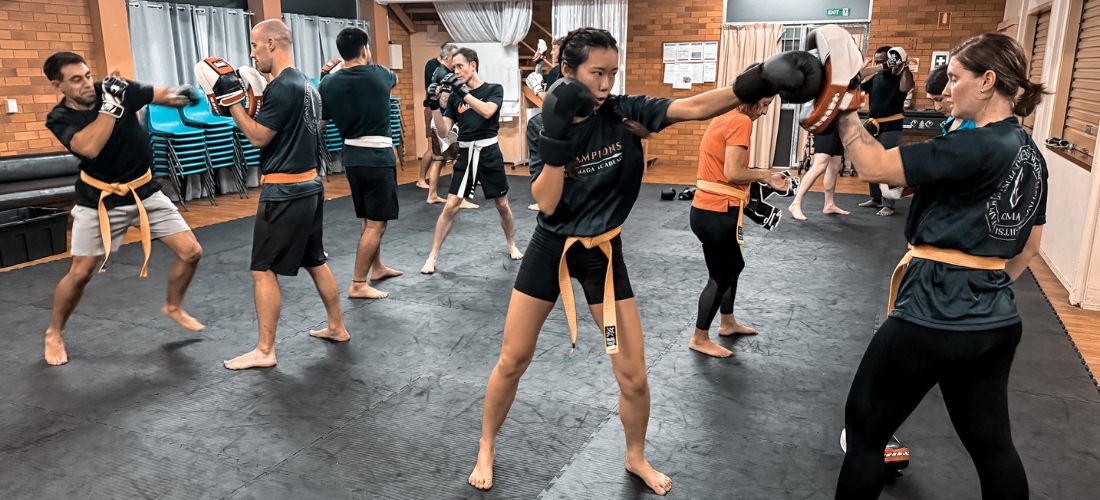
This is why at CKMA we do not teach Krav Maga in isolation. Our training is built around five pillars: self-defence, striking, clinch, Jiu-Jitsu, and weapons training. Each one builds on the others.
In practice, a student who trains consistently with us for twelve months typically develops in ways that go well beyond what they came in expecting. They are more aware of their environment. They move better. They have practical striking skills they can apply under pressure. They understand how to manage close-range contact. They have ground defence foundations that help them recover from a bad position rather than panic. And they understand the legal and decision-making framework around all of it.
What to look for in a martial arts school
Choosing a school matters as much as choosing a martial art. I have seen strong martial arts systems taught badly, and I have seen average systems produce capable, confident people because the coaching and culture were right.
Qualified instructors with verifiable credentials
A coaching team that is actively developed
Honest expectations
A safe, ego-free culture
A clear pathway
A no-pressure first visit
What the red flags actually look like
Since I raised it, here is what I have seen in the industry that genuinely concerns me.
- Schools that teach self-defence techniques in isolation without ever addressing awareness, de-escalation, or the legal framework around using force. Students leave those classes with physical tools and no context for when or how to use them.
- Instructors with impressive-sounding rank who trained under one system for a short period and now teach independently with no ongoing development or accountability. Rank without verifiable lineage warrants scrutiny.
- Gyms that market themselves around aggression, ego, and toughness, and then wonder why beginners, women, and families do not stay. The culture of some martial arts environments actively works against the people who would benefit most from training.
- Schools that focus on only one range. Strikers who have never been taken down. Grapplers who cannot strike their way out of trouble. Either gap can become a serious problem in a real situation.
None of this is about criticising other schools. It is about helping you ask the right questions when you are choosing a martial art and a place to train.
Choosing a martial art for kids and teens
Choosing a martial art for your child involves a different set of considerations. When parents ask me about the best martial arts for kids, I tell them the style matters, but the coaching quality and the safety environment matter more. For a side-by-side look at each style, read our guide to the best martial arts for kids.
The best programs for children and teenagers build confidence, discipline, focus, and resilience alongside age-appropriate self-defence foundations. They are run by qualified instructors who understand child development, not just martial arts technique.
At CKMA, all youth instructors hold external qualifications in MAIA Kids Safe Martial Arts Instructor certification and hold a current Blue Card. Youth classes are age-specific. Children are not mixed with adults or placed in programs designed for older students. Every session is supervised, structured, and built around safe partner work from day one.

The best martial art for adults
Choosing a martial art as an adult involves a different set of priorities to enrolling a child. The style matters less than most people expect. The coaching quality and the training culture in the room matter more.
The best adult programs build practical self-defence skill, genuine fitness and real confidence, not just technique for its own sake. They are led by instructors with real credentials and a structured curriculum, not just years of experience loosely passed on.
At CKMA, our Adult Krav Maga classes are led by qualified, credentialed instructors within the Gendai Ryu Krav Maga and Jiu-Jitsu system. Classes run four nights a week and are structured for complete beginners from the first session, with a genuine belt pathway assessed on skill and consistency, not attendance alone.

So, which martial art should I learn?
If your goal is real-world safety, start with Krav Maga. It is the best martial art for self-defence because it trains the before, during and after. If you want to compete, choose a sport-based art and a school built around competition. If you are choosing for your child, the best martial art for kids is one taught in age-specific classes by qualified coaches.
If you are in Brisbane, compare our martial arts classes in Brisbane or our self-defence classes in Brisbane, and come in for a no-pressure first class.

FAQ About Martial Arts
What is the best martial art for self-defence in Brisbane?
Krav Maga is the best martial art for self-defence because it is the most practical and complete system available. It is the only major system designed from the ground up to address all three phases of a self-defence situation: before, during, and after. That includes awareness, de-escalation, physical response, and the legal considerations that follow. At CKMA, we teach Krav Maga through the Gendai Ryu Krav Maga and Jiu-Jitsu system, which integrates striking, clinch, Jiu-Jitsu, and weapons training into a structured, progressive pathway.
Can I start martial arts with no experience or fitness?
Yes. All programs at CKMA are built from the ground up for people with no prior training. You do not need to reach a fitness threshold before you start. Fitness, confidence, and capability develop through consistent training. You begin where you are.
What martial arts do you offer for children in Holland Park?
CKMA offers Kids Krav Maga for ages 6 to 10 and Teen Krav Maga for ages 11 to 17, both at 889 Logan Road, Holland Park. Classes run after school and are led by qualified, Blue Card-holding instructors with MAIA Kids Safe Martial Arts Instructor certification. Our Youth Martial Arts Programs are age-specific, beginner-friendly, and focused on practical self-defence alongside discipline, focus, and character development.
How is Krav Maga different from other martial arts?
Most martial arts are either sport-focused or tradition-focused. Krav Maga is designed specifically for real-world self-defence across all three phases of a confrontation. It integrates proven techniques from multiple disciplines, keeping only what works under real pressure, and builds in the awareness, decision-making, and legal understanding that complete self-defence training requires.
What should I look for when choosing a martial arts school in Brisbane?
Look for verified instructor credentials and ongoing development, a structured training pathway with clear progression, a safe and ego-free training culture, honest expectations around results, and a no-pressure trial class before any commitment is required. The school’s culture will shape your experience more than the style alone.
Is martial arts training safe for beginners?
Yes, when it is taught properly. At CKMA, safe partner training habits are introduced from the first class. All instructors are trained to coach beginners progressively, manage risk, and create an environment where students can develop skill without unnecessary injury. Safety is one of our four core values and it shapes every coaching decision we make.
Which martial art should I learn first?
It depends on your goal. If you want practical self-defence, start with Krav Maga, because it covers what happens before, during and after a confrontation. If you want to compete, choose a sport-based art like BJJ, Muay Thai or boxing. For children, choose an age-specific program with qualified, Blue Card-holding coaches.