A good training environment should never feel intimidating. If a gym feels aggressive or unwelcoming, that is a problem with the culture, not with self-defence training itself. The right academy actively removes those barriers.

What self-defence actually is, how good training works, who it suits, and how to find the right place to start in Brisbane Southside.

Most people who start looking for self-defence training are not sure exactly what they are looking for. They know they want to feel safer. They know they want to be more capable. But they are not sure what real self-defence involves or where to start.
Self-defence is the ability to protect yourself and the people around you from harm. That sounds simple. But most people misunderstand what it actually involves.
It is not fighting. It is not about being aggressive, dominant, or unbeatable in a physical confrontation. Real self-defence starts long before any physical contact occurs. It is built on awareness, sound judgement, and the ability to make good decisions when a situation becomes unpredictable or threatening.
A person with these skills is harder to surprise, harder to overwhelm, and better equipped to manage a threatening situation with composure. They understand how to read environments, recognise warning signs early, and respond in a way that is proportionate and effective.
Physical techniques matter. But they are the last layer, not the first. Self-defence done well teaches all of it. So, what is self-defence in practice? It covers awareness, prevention, de-escalation, and physical response when nothing else works.
Martial arts is a broad term. It covers everything from competitive sports like boxing and Brazilian Jiu-Jitsu to traditional systems like karate and judo. Many martial arts are excellent for fitness, discipline, mental resilience, and developing physical skill. But not all of them are designed with real-world self-defence as the primary goal.
Sport-based martial arts operate within rules. Techniques are developed to score points or win matches under controlled conditions. That is valuable training, but it is different from training for situations where there are no rules, no referee, and no warning.
A dedicated system accounts for real-world variables like surprise, multiple attackers, confined spaces, and the impact of stress on the body and mind. At CKMA, we teach self-defence through the Gendai Ryu Krav Maga and Jiu-Jitsu system. The system integrates striking, clinch, Jiu-Jitsu, and weapons training into a single, practical framework taught through a self-defence lens, not a competition lens.
Effective self-defence training covers three distinct layers. Understanding them helps you understand what you are actually building when you train.
Most dangerous situations can be avoided entirely when you know what to look for. Awareness training teaches you to read environments, recognise behaviour that signals threat, and position yourself in a way that reduces risk. It builds habits that become automatic over time. This layer is often undervalued. At CKMA, it is treated as foundational.
The second layer covers what happens when a situation has begun to develop and a physical response has not yet occurred. De-escalation is the ability to manage conflict verbally and behaviourally. This means setting boundaries clearly, staying calm under pressure, and communicating in a way that reduces tension. Avoidance is not weakness. Getting away from a threat before it becomes physical is always the best outcome.
The third layer is physical technique. It matters enormously. But it works best when it is built on the two layers before it. Effective physical self-defence relies on gross motor skills, natural body mechanics, and responses that hold up under the stress and unpredictability of a real situation. Getting this layer right means practising under conditions that replicate real pressure, not just running drills in a calm environment.
Not all self-defence training is equal. Here is what separates effective training from training that falls short.

A system built on memorising hundreds of specific techniques will fail the moment a situation does not match the script. Effective training teaches principles so you can adapt across a wide range of real situations.
Under genuine stress, fine motor skills deteriorate. The heart rate rises, adrenaline floods the system, and complex movements become unreliable. Good training builds techniques around gross motor skills that remain accessible under pressure.
Self-defence training in a calm, controlled environment only goes so far. Students need progressive exposure to pressure and unpredictability so those skills hold up when it counts. This is done carefully, not recklessly.
A good program has a clear structure that takes students from foundational concepts through to more complex scenarios. Students know what they are working on and why. Progress is visible and measurable.
How a gym trains matters as much as what it trains. An environment built on ego, intimidation, or unrealistic promises will not produce students who are genuinely capable and confident. Training culture shapes outcomes.
Self-defence training is not just for people who feel at risk. It is for anyone who wants to feel more capable and prepared in everyday life.

Our adult classes run for beginners and experienced students. Training covers self-defence, striking, clinch, Jiu-Jitsu, and weapons awareness. Classes run Monday to Thursday evenings.

Never trained before? This page explains what Krav Maga is, what happens in your first class, and which program suits you best. No experience, fitness, or confidence needed to begin.
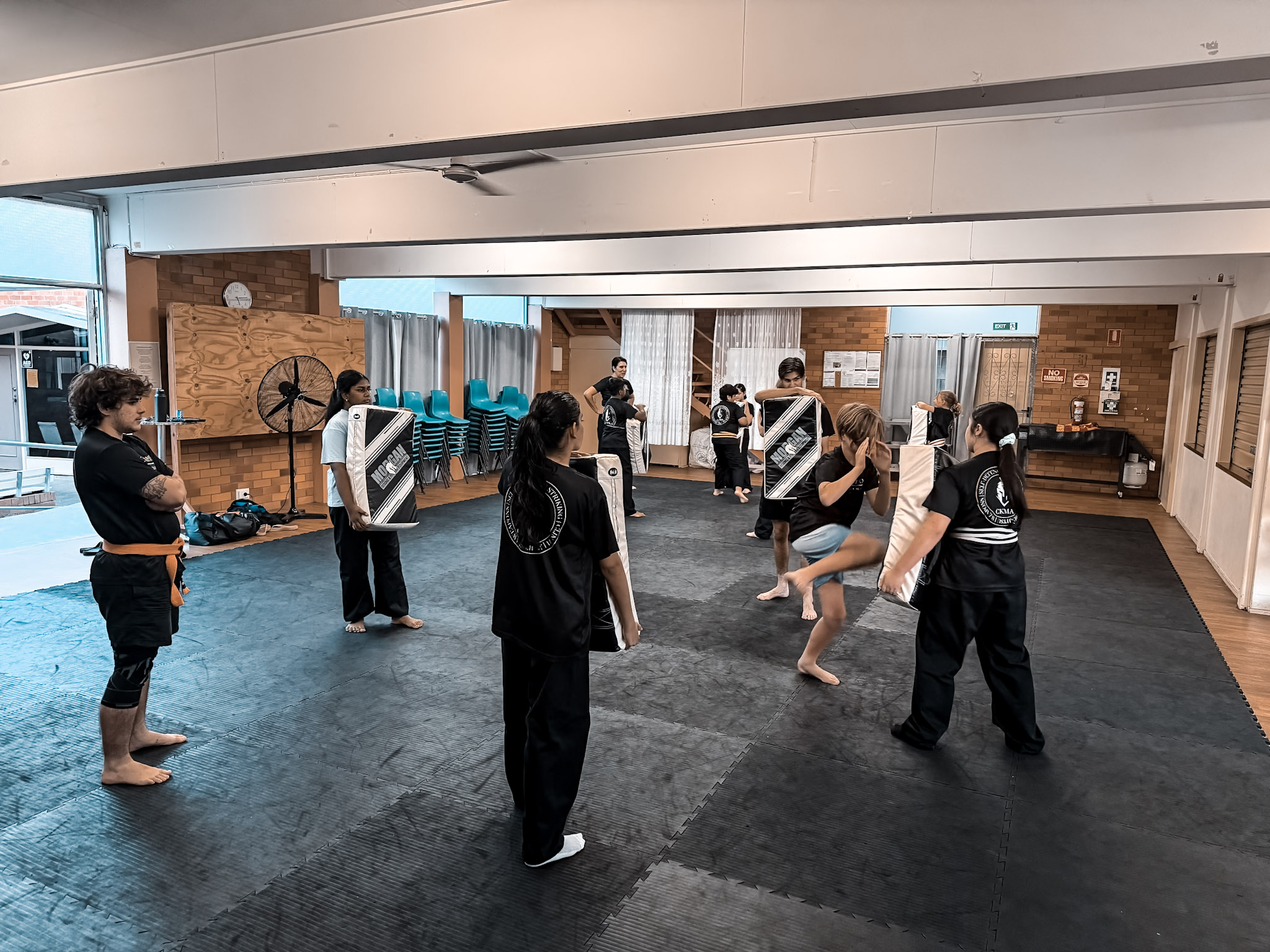
Our youth programs run for kids aged 6 to 10 and teens aged 11 to 17. Classes are structured around confidence, discipline, resilience, and practical self-defence. Classes run Monday to Thursday evenings.
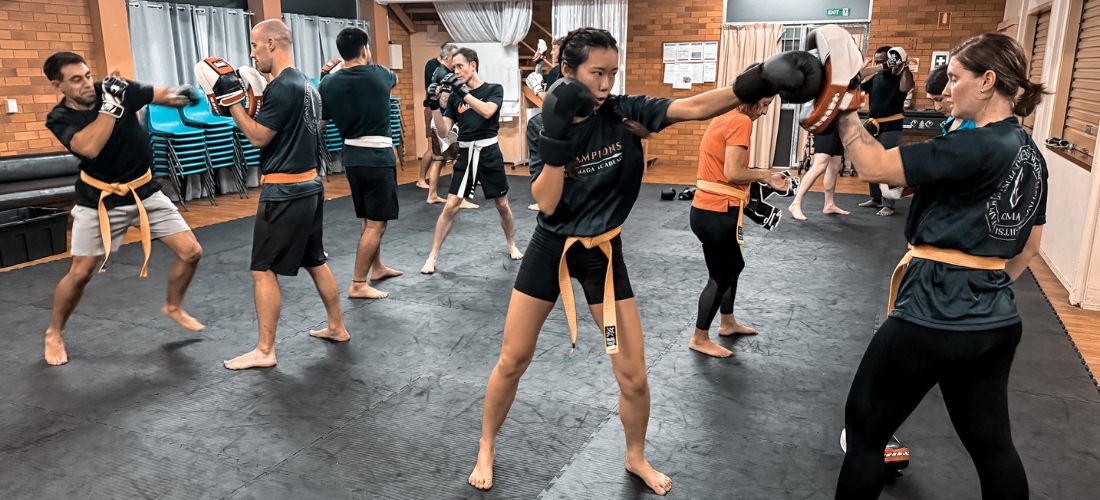
Trained before in Krav Maga, boxing, Muay Thai, or Jiu-Jitsu? This page explains how experienced students enter the CKMA program and what to expect from your first session.
In Queensland, the right to defend yourself and others is recognised under the Criminal Code. A person is generally justified in using force to protect themselves or another person from unlawful assault, provided that the force used is reasonable in the circumstances.
The key word is reasonable. The law does not permit unlimited force in response to any threat. The level of force used must be proportionate to the threat faced. In some circumstances, a pre-emptive strike may be legally justified if the threat is imminent and the response is necessary and proportionate. Excessive force, or continuing to use force after a threat has ended, can shift the legal position significantly.
This is why responsible self-defence training always addresses the legal and ethical dimensions of using force, not just the physical techniques. Students learn not only what to do, but when it is appropriate to do it and what their responsibilities are in the aftermath.
Not every self-defence program is built the same way. If you are comparing options in Brisbane Southside, here is what to look for.
Check credentials. A self-defence instructor should hold recognised qualifications with a clear training lineage and verifiable experience. Real-world background adds significant depth.
Good training has a logical structure. Students should be able to see where they are in their development and what comes next. No structure produces no foundations.
Beginners are welcome. The environment is respectful and the standard is high.
This matters especially for youth programs. Instructors working with children should hold relevant certifications and working with children checks.
Champions Krav Maga Academy is located at 889 Logan Road, Holland Park, and offers structured self-defence classes to the broader Brisbane Southside community including Mount Gravatt, Greenslopes, Coorparoo, Camp Hill, Carina, Mansfield, Wishart, Tarragindi, and Annerley.
No experience needed. No fitness level required. No pressure.
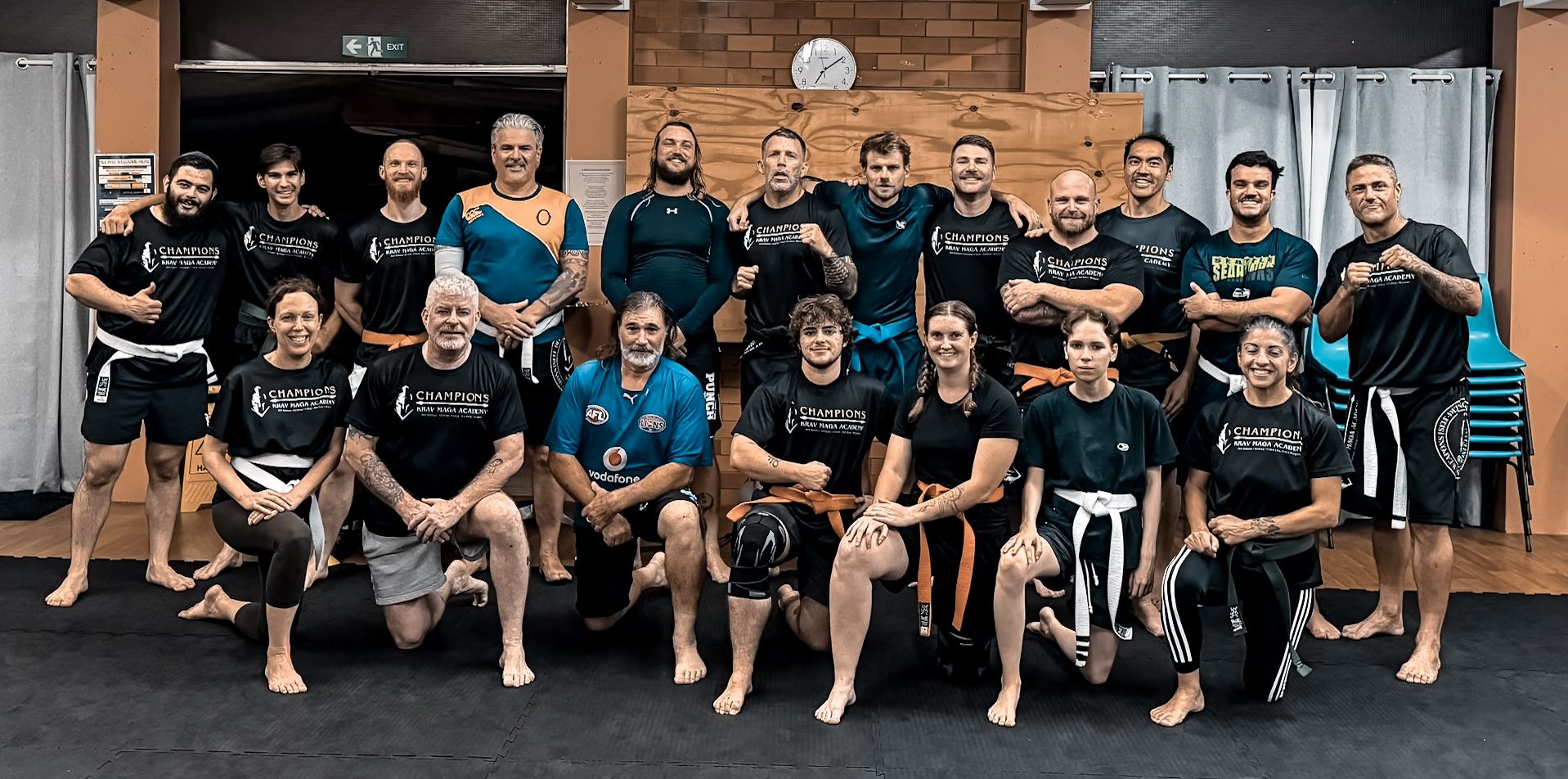
Krav Maga is a self-defence system developed to teach practical, effective protection in real-world situations. At CKMA, Krav Maga is taught through the Gendai Ryu system, which integrates striking, clinch, ground work, and weapons awareness into a complete self-defence framework.
Foundational awareness and basic physical responses can be developed in a relatively short period of consistent training. Real capability builds over months and years of structured practice. There are no shortcuts, but progress is visible from early on.
No. Self-defence training is not a young person’s pursuit. Adults of all ages train at CKMA. The program is built around practical skills, not athleticism. Fitness improves through training. You do not need it before you arrive.
No. You start where you are. Most students who joined CKMA were not fit when they began. Training builds fitness as a byproduct of consistent practice.
A good training environment should never feel intimidating. If a gym feels aggressive or unwelcoming, that is a problem with the culture, not with self-defence training itself. The right academy actively removes those barriers.
Freezing and panic are normal physiological responses to threat. Good self-defence training accounts for this. Stress inoculation and progressive pressure training build the familiarity and composure needed to act when it matters.
Consistently, yes. Students report that the composure, awareness, and capability developed through training carries into everyday life. Workplace pressure, difficult conversations, and challenging situations feel more manageable when you have built a foundation of real capability.
Enter your details below and we will show you the timetable, membership options, and our current offer.