
5 Reasons Why Krav Maga Is a Martial Art and Why That Matters
Is Krav Maga a martial art? Yes. Krav Maga is a martial art built for modern self-defence. It has a clear system, structured grading and a guiding philosophy, like any martial art. It simply skips forms, tradition and competition, and trains for real situations instead.
A lot of people wonder whether Krav Maga is really a martial art or just a modern self-defence system. It doesn’t look like traditional styles such as Karate or Taekwondo, and it doesn’t follow the same structure with forms or uniforms. But once you understand where Krav Maga came from and what it’s designed to do, you start to see how it fits the definition of a martial art, even if it doesn’t look like a typical one.
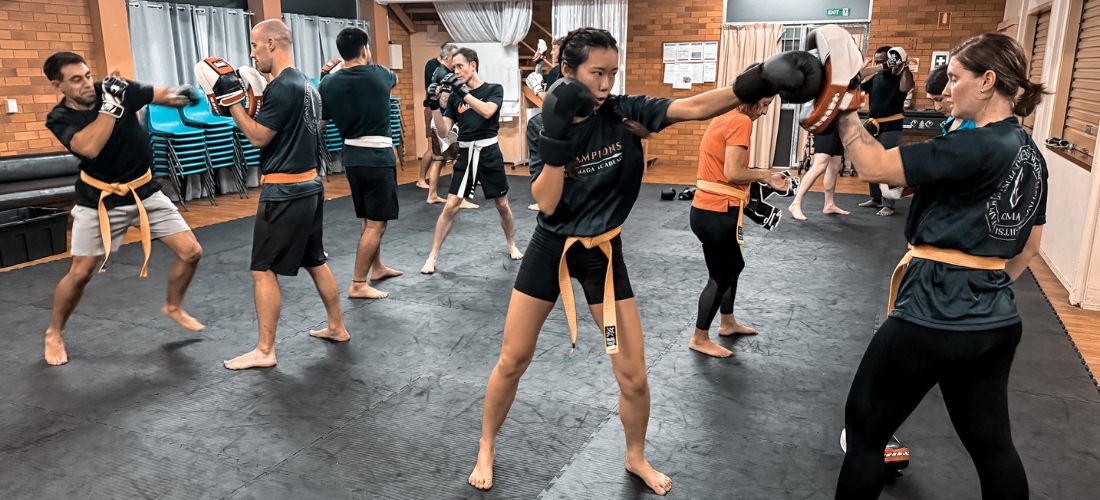
Most martial arts started as systems created to protect people in dangerous situations. They were not made for competition or sport originally. For example, Karate came from Okinawa, where locals developed self-defence techniques during times when weapons were banned. Jujutsu and later Judo were developed from battlefield techniques used by samurai in Japan. In China, Kung Fu was shaped through both military training and teachings in Buddhist temples. Even Taekwondo, which became more formalised in the 20th century, has its roots in older Korean combat styles that were focused on real fighting.
As these martial arts spread and evolved, many began to add things like belt systems, competitions, and formal rituals. These changes made training more organised and helped attract more students. Today, arts like Karate, Taekwondo, and Judo are known not just for their fighting techniques, but also for the discipline, respect, and progression they bring to the training process.
Unlike traditional martial arts, Krav Maga was developed much more recently. It wasn’t influenced by sport or ancient tradition. It doesn’t involve choreographed forms or point-scoring competitions.
This often leads people to ask: is Krav Maga a martial art at all?
But Krav Maga was built for survival in the modern world. It combines the most effective techniques from various combat sports and martial arts, including boxing, wrestling, Muay Thai, and Brazilian Jiu-Jitsu. These techniques are adapted specifically for self-defence. The system is designed to work under pressure, in unpredictable situations, and with minimal training time. This focus on real-world effectiveness is what sets it apart from many traditional styles, but it doesn’t make it any less of a martial art.
Martial arts have always been about helping people develop the ability to protect themselves. They also teach focus, control, and mental strength. Krav Maga does all of these things. It might have a different structure, but the goals and benefits are the same.

Krav Maga Meets the Core Definition of a Martial Art
A martial art is more than just a collection of fighting techniques. It involves structured learning, mental discipline, and often a guiding philosophy. There’s usually a focus on personal growth, control under stress, and the responsible use of physical skills.
Krav Maga checks all of these boxes, which is why Krav Maga is a martial art in every sense that matters. While it might skip the rituals and traditions you’d find in Karate or Kung Fu, it still teaches students how to move well, stay calm under pressure, and make smart decisions in high-stress moments. It also has a step-by-step training approach that helps people build their skills over time.
Krav Maga Military Foundations Align With Most Martial Arts Origins
Krav Maga was originally created by Imi Lichtenfeld for the Israeli military. The goal was simple: teach soldiers how to defend themselves quickly and effectively. The techniques had to be easy to learn and work under extreme stress.
Today, Krav Maga has been adapted for civilians. While the techniques are still practical and efficient, they’re taught in a way that’s safe, progressive, and accessible for everyday people. Whether you’re a parent, a student, or someone who just wants to feel more confident, Krav Maga is designed to give you tools you can actually use if you need to.
Krav Maga Draws Proven Techniques From Established Martial Arts
Krav Maga is often described as a hybrid system. It draws from multiple martial arts to build a complete self-defence approach. The punches and footwork come largely from boxing. The use of knees and elbows is similar to Muay Thai. Grappling and ground control techniques are taken from Brazilian Jiu-Jitsu and wrestling.
The difference is that Krav Maga only keeps what works for self-defence. It doesn’t waste time on techniques that are flashy but not functional. Everything taught in class is meant to prepare you for real-world situations. That kind of focused training is a key part of why Krav Maga is so effective.
Krav Maga Embraces a Practical Philosophy Like Other Martial Arts
You won’t find long codes of honour or traditional rituals in a Krav Maga class, but that doesn’t mean there’s no guiding philosophy. Krav Maga teaches people to stay aware of their surroundings, to avoid danger when possible, and to act quickly and decisively when there’s no other choice.
The mindset is about staying calm under pressure, controlling fear, and using only the amount of force needed to stop a threat. These values are just as important as physical skills, and they often help students build confidence and mental strength in everyday life.
Krav Maga Uses Structured Grading Like Other Martial Arts
Over time, many Krav Maga organisations have added grading systems to give students a clear path for development. While groups like Krav Maga Global (KMG) and the the International Krav Maga Federation (IKMF) use patch-based systems, others use coloured belts.
Krav Maga Worldwide, for example, uses a belt system that starts with yellow and ends with black, similar to traditional martial arts. The Fédération Européenne de Krav Maga (FEKM) and Israeli Krav Maga Association (IKMA) follow a similar model. In Australia, schools like Gendai Krav Maga and Jiu-Jitsu and Krav Maga Defence Institute also use belts to help students track their progress.
This structure helps students see how far they’ve come and what they’re working toward. It also brings more depth and organisation to the training, which helps people stay motivated and consistent. Instructors in Australia are increasingly blending martial arts principles into their Krav Maga programs. This mix of self-defence and structured learning gives students the best of both worlds.
So, is Krav Maga a martial art?
So, is Krav Maga a martial art? The answer is yes. It teaches real skills, builds discipline, and helps people develop confidence and control. It may not look like traditional styles, but its purpose and results speak for themselves.
At Champions Krav Maga Academy in Brisbane, we focus on two core training goals:
Self-defence always comes first. Our self-defence techniques are designed for real situations, not for sport or show.
We integrate martial arts principles to help students build well-rounded skills, technical depth, and long-term progress.
This approach means our students don’t just learn how to protect themselves. They develop structure, confidence, and capability that carries over into every part of their lives.
If that sounds like what you’re looking for, learn more about our Adult Krav Maga Classes and join us on the mats in Brisbane.